Belt demagnetisation

FluxRite mkII

Belt demagnetisation that stops false trips at their source.

FluxRite mkII: how the conditioning heads demagnetise a steel cord belt (1 min 10 s, captions on screen, unmute for sound)
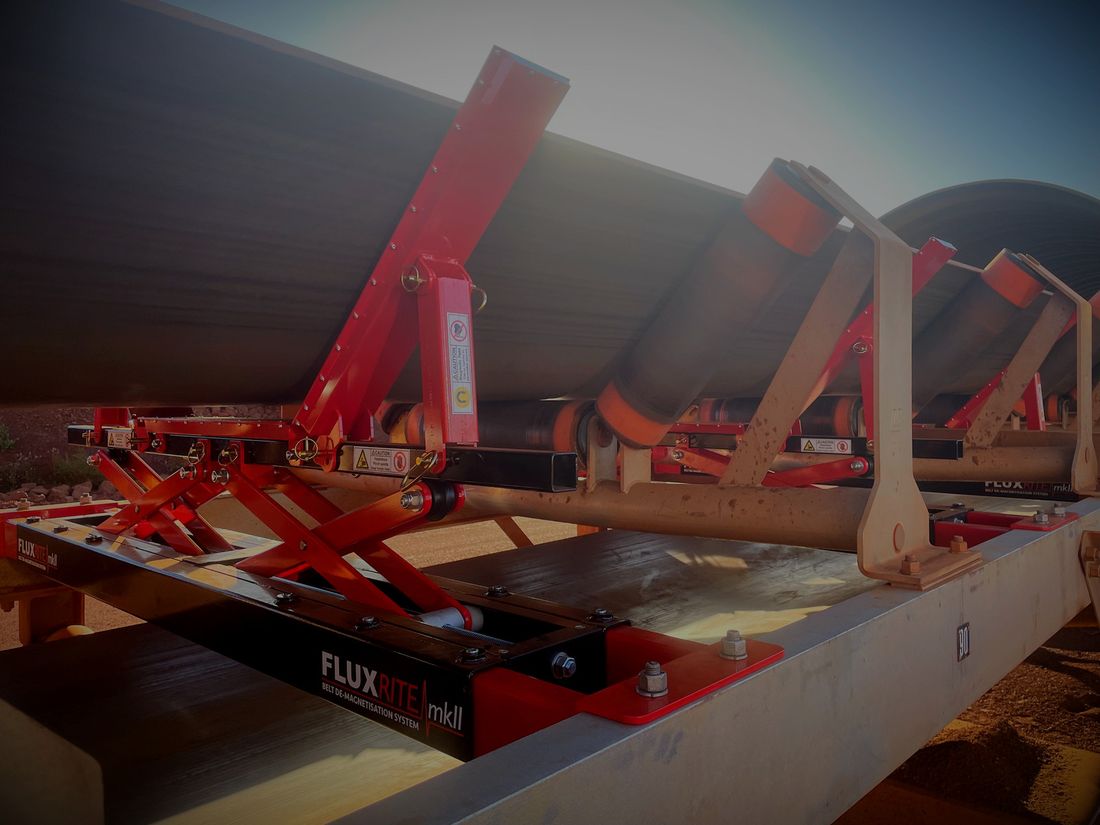
FluxRite mkII installed on site
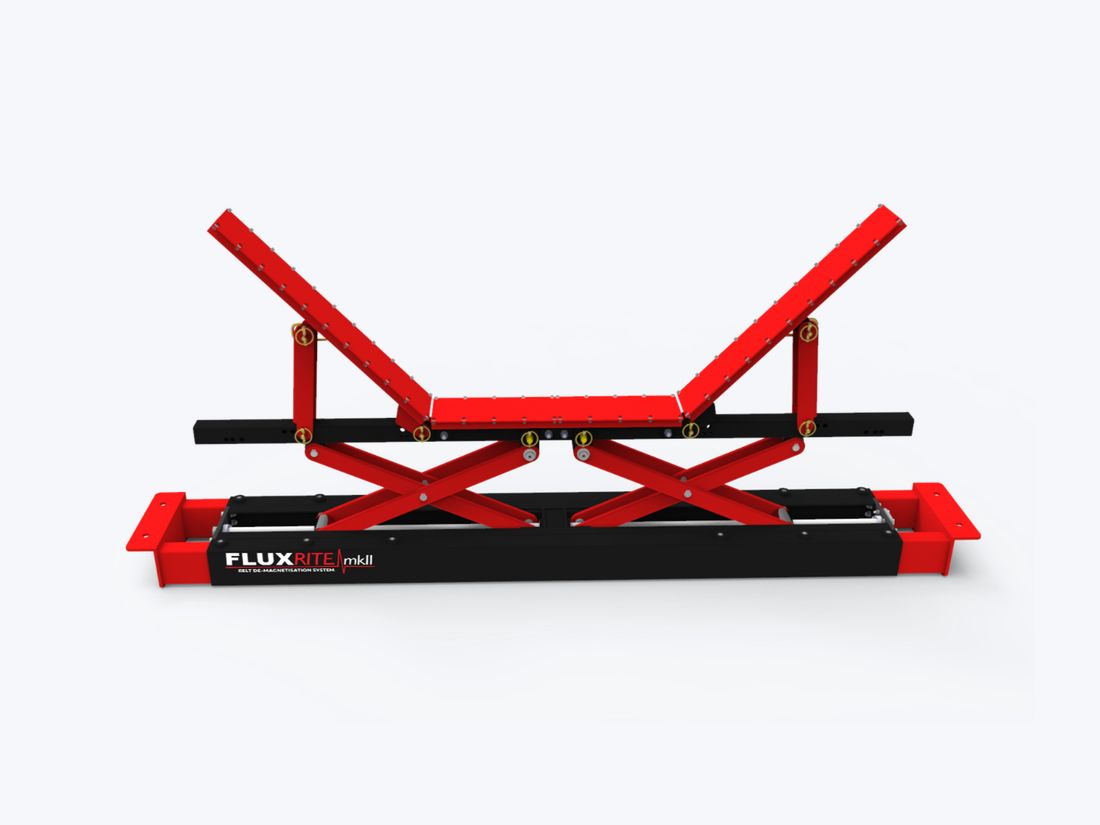
Three-frame conditioning assembly
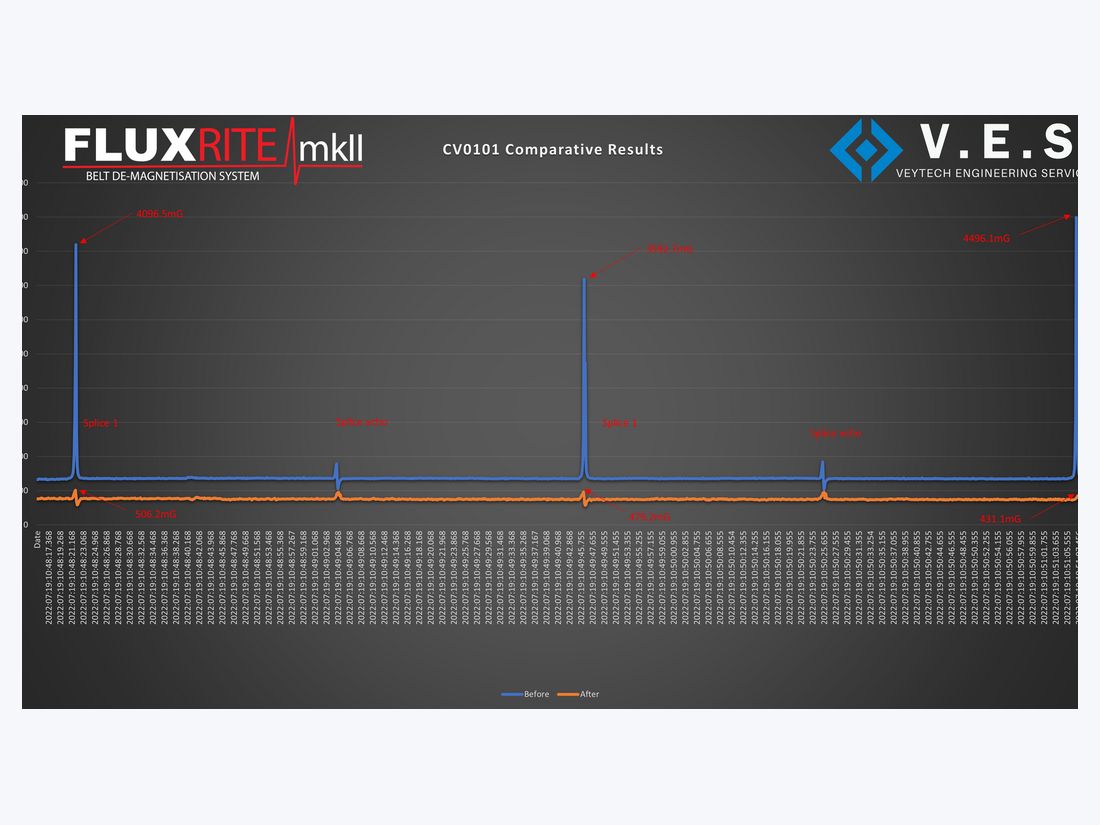
Splice flux before and after: CV0101 comparative results
Belt demagnetisation · Patented

Magnetised steel-cord splices are the most common cause of tramp-detector false trips. FluxRite's three frames of permanent rare-earth conditioning heads strip the residual magnetism from the belt as it passes. No power, no controls, no major modification to the conveyor.

  • Installs on existing conveyors with adjustable frames
  • Reduces splice flux by up to 95%, eliminating false trips and the undetected tramp that follows when sites turn sensitivity down
4496 mGSplice flux before
431 mGAfter FluxRite
0 WPower required

FluxRite mkII in detail: why belts magnetise, how the system works, what it delivers

The problem

The FluxRite Belt Demagnetisation System is essential for maintaining the accuracy of tramp metal detectors on steel cord conveyor belts. Magnetism from tramp metal magnets, belt scanning systems and electrical currents builds up in the steel cords and concentrates at the splices. This residual magnetism reduces the effectiveness of the tramp metal detector, causing false alarms, or missed detections once operators lower the sensitivity to stop the false trips.

How FluxRite works

A three-frame assembly carries conditioning heads fitted with permanent rare earth magnets, positioned beneath the carry side of the belt. As the magnetised splices pass over the heads, rapid polarity reversals and the increasing distance between the head and the belt neutralise the residual magnetic field in the cords and splices. There is no power supply, no controller and nothing to calibrate after the initial installation and commissioning.

Measured results

Splice flux before installation4496.1 mG
Splice flux after installation431.1 mG
Typical reductionup to 95%
Power requiredNone (permanent magnets)

Installation

  • Adjustable frames mount to the existing conveyor structure; no major modification and no belt cutting.
  • Located upstream of the tramp metal detector so the belt arrives demagnetised.
  • Sized to belt width; supplied with installation drawings.

Common questions

Does it work with any tramp metal detector? Yes. It conditions the belt, not the detector, so it improves any downstream detector, TripTronic or otherwise.

Does the effect wear off? The heads are permanent magnets and the belt is re-conditioned on every pass. Flux is re-measured during service visits.

False trips on your metal detector?

Send us the belt type, splice count and detector model and we will tell you whether FluxRite mkII will fix it.